The La Trobe Support for Decision Making Practice Framework Learning Resource
  • ABOUT
    • Full Credits
  • Module 1
  • Module 2
  • Module 3
    • Step 1: Knowing the person
    • Step 2: Identifying & describing the decision
    • Step 3: Understanding the person's will & preferences for the decision
    • Step 4: Refining the decision & taking account of constraints
    • Step 5: Consider if a formal process is needed
    • Step 6: Reaching the decision & associated decisions
    • Step 7: Implementing the decision & seeking advocates if necessary
  • Module 4
  • Module 5
    • Attention to communication
    • Education about consequences and practicalities
    • Listening and engaging to ensure all options are considered
    • Creating opportunities
    • Breaking things down
    • Enabling risk
  • Module 6
  • Resources
  • Contact
Picture
Picture
Strategies for Practice

Enabling Risk

Many benefits arise from supporting people with cognitive disabilities to participate in positive risk taking. These include increased engagement and the development of new skills. 
Activities involving risk can range from things such as cooking to forming new friendships. 
​Enabling risk means being proactive.  You will need to find ways for the person to undertake a risky activity while minimising harm. For example, if the person’s preference is to go outside on a sunny day, then ensuring they wear a hat, apply sunscreen and have water is a good way forward.
Knowing what the person wants, and staying true to their preferences, is an important part of enabling risk. 

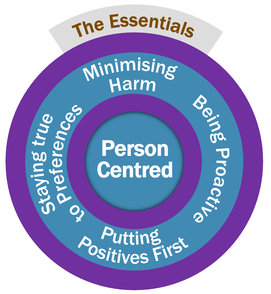
The Essentials of Risk Enablement

The 4 Essentials of Risk Enablement are:
​
  1. Putting Positives First
  2. Being Proactive
  3. Staying True to Preferences
  4. Minimising Harm
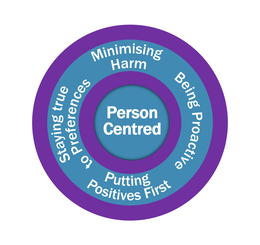
​These are shown in Figure 7.

​You will note that the person is at the heart of the risk enablement process.
Picture
Figure 7 The Essentials of Risk Enablement
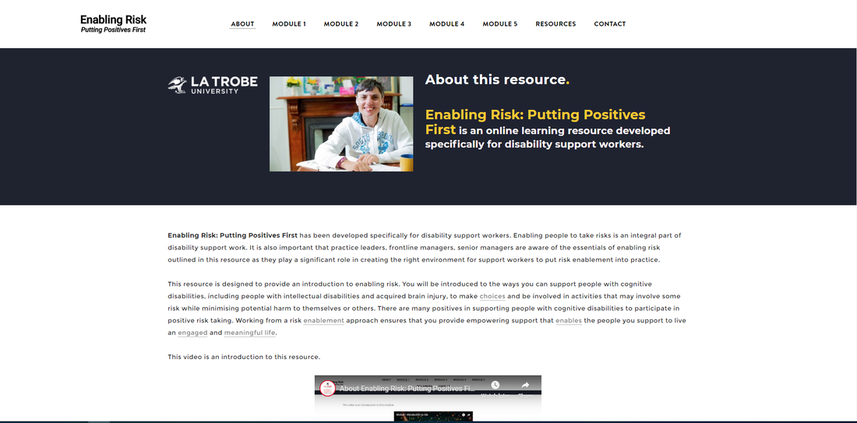
You can learn more about Enabling Risk in disability support work, and undertake activities, by accessing the separate online learning resource we have developed. You can access the link via the Module Resources section. 
Picture

Summary Module 5

​The Strategies are associated with every Step in the support for decision making process.
This Module has highlighted that supporters should:
  • Tailor the strategies to the individual and their situation
  • Find different ways to communicate
  • Work through consequences of the decision with the person
  • Take the time to listen
  • Break the decision into smaller parts
  • Enable positive risk taking.
go to module 6
back to top
Picture
​The La Trobe Support for Decision Making Practice Framework has been developed by La Trobe University Living with Disability Research Centre and supported with funding from the NSW Department of Family and Community Services (FACS). 

The purpose of this website is to provide an evidence-based source of reference for those supporting people with developmental or acquired disabilities to make decisions.
Creative Commons License
CC-BY-SA
This work is licensed under a Creative Commons Attribution-ShareAlike 4.0 International License.
A suggested way to cite this resource:
Bigby, C., Douglas, J., & Vassallo, S. (2019). The La Trobe Support for Decision Making Practice Framework. An online learning resource. Retrieved from: www.supportfordecisionmakingresource.com.au
  • ABOUT
    • Full Credits
  • Module 1
  • Module 2
  • Module 3
    • Step 1: Knowing the person
    • Step 2: Identifying & describing the decision
    • Step 3: Understanding the person's will & preferences for the decision
    • Step 4: Refining the decision & taking account of constraints
    • Step 5: Consider if a formal process is needed
    • Step 6: Reaching the decision & associated decisions
    • Step 7: Implementing the decision & seeking advocates if necessary
  • Module 4
  • Module 5
    • Attention to communication
    • Education about consequences and practicalities
    • Listening and engaging to ensure all options are considered
    • Creating opportunities
    • Breaking things down
    • Enabling risk
  • Module 6
  • Resources
  • Contact